A Dental Implant Can Replace a Missing Tooth and Its Root
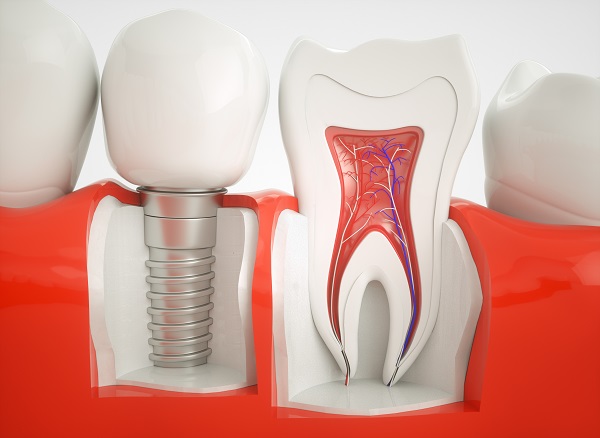
If you have a missing tooth, a dental implant and crown can be used as a replacement. The implant restoration replaces both the missing tooth and the root. This option is preferred over other tooth-replacement options because it looks and functions like a natural tooth, and it achieves that without compromising the health of the remaining teeth.
The dental implant advantage
After a tooth is lost, the bone in the area is no longer receiving stimulation from the tooth’s root and gradually, the bone starts to deteriorate. It is possible to halt further bone breakdown by placing an implant to replace the lost tooth and restore the lost stimulation. This is especially crucial for the front set of teeth, where bone resorption is most likely to be noticed.
Also, the gap left by the missing tooth can allow nearby teeth to move or shift. When the teeth are out of alignment, the bite is affected negatively in a condition known as malocclusion. This can alter how the person chews, and affects the surrounding muscles and joints, causing issues such as recurrent headaches. It is harder to clean misaligned teeth, predisposing them to the risk of decay and gum disease. Dental implants can prevent healthy teeth from moving into the gap and provide stability for the bite while reducing excess pressure on remaining teeth.
Placing a dental implant
The implant procedure involves the surgical insertion of a small titanium screw into the jawbone where the tooth was lost. Over three to five months, the implant and the bone will fuse to create a solid anchor for the tooth prosthesis. During this process (called osseointegration) the dentist will place a temporary tooth crown over the implant site until the final crown is placed.
After osseointegration is complete, the next process is often to uncover the implant and connect the abutment if it was not placed initially. The abutment will be the link between the implant post and the dental crown. The gum will be left to heal for some time after this process. Finally, the dentist will fabricate a porcelain dental crown for the patient, which will be fixed over the abutment. After cementing the crown permanently in place, the patient will have a restored dentition and all dental functions.
A missing tooth can affect oral health and self-confidence. The teeth should not be treated as single units, but as a team working together in harmony. Dental issues occur when the teeth are disjointed.
Do you have one or more missing teeth?
A dental implant can give you a natural-looking dental restoration that will fit in with the rest of the teeth. It is the only replacement option that does not only replace the crown, but also the root. This makes it the perfect choice to preserve jawbone volume and maintain oral health. If you are looking to replace a lost tooth, contact our office to book a consultation appointment.
Request an appointment here: https://implantfamilydentist.com or call Miami Implant & Family Dentists at (305) 230-4040 for an appointment in our Miami office.
Check out what others are saying about our services on Yelp: Read our Yelp reviews.
Recent Posts
Choosing Invisalign® can make your teeth-straightening experience a more pleasant one. The clear aligners of this system can straighten teeth in a gentler way than traditional braces. You must have the discipline to change them on time, which is often every week or two. Here are the details on how you can renew your smile…
Extensive tooth loss can impact your oral health and quality of life. Fortunately, all-on-4 dental implants offer a reliable foundation for a renewed smile that supports your oral health and overall well-being. This innovative technique provides a stable, long-lasting solution for those who have lost most or all of their teeth and are looking for…
Composite fillings are among the most commonly used materials for restoring teeth affected by cavities or minor damage. These dental fillings repair damaged teeth and restore their function and appearance. While there are several types of fillings besides composite ones, patients may be unsure which one is right for them. Fortunately, a dentist can help.Composite…
While Invisalign® is an effective alternative to braces, it may not be the ideal treatment for everyone. The candidacy process happens in one appointment, involving X-rays, a physical examination, and a review of the patient's dental records. Here is a closer look at the factors we consider when choosing an ideal candidate.While we strongly advise…