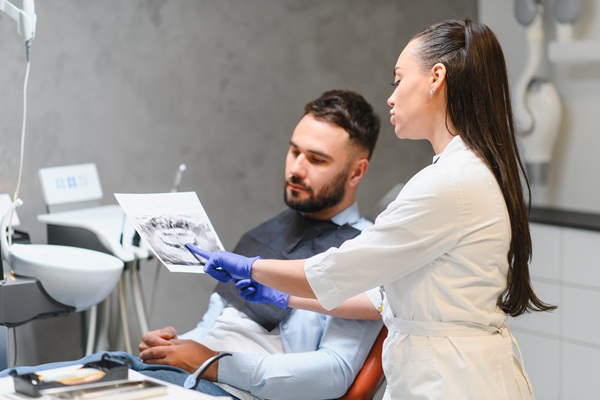
Bone graft for dental implants can strengthen the jaw and create the support needed for long-term implant success, especially when bone loss has already occurred. Bone loss may occur after unaddressed tooth loss or advanced gum disease. When the jaw lacks sufficient height or width to support an implant, the dentist may recommend grafting to rebuild the area before implant placement.
Why bone support matters
Dental implants, the gold standard of tooth replacement, depend on healthy bone for stability. The implant post must fuse with the jaw through a process called osseointegration, which helps the implant function like a natural tooth root. If the bone is too thin or weak, the implant may not have the support needed for proper healing and long-term function, underscoring the importance of bone grafting before the initial procedure.
A full evaluation from a general dentist helps determine whether bone grafting is necessary. The dentist may use digital imaging or a cone-beam scan to measure bone volume and assess the condition of the jaw. Once they assess the area, the dentist and their team can customize the treatment plan based on the level of support the future implant will need. Bone grafting for dental implants is not always required, but when recommended, it helps build a stronger foundation for the next stage of care.
Five important facts about bone grafts
Patients often feel more prepared when they understand what a bone graft involves and why the healing phase matters. While every treatment plan is different, these five points often help explain the role of a bone graft for dental implants:
- Not every patient needs the same type of graft. Some cases require only a small amount of added bone, while others need more support to rebuild the treatment area.
- Healing takes time because the graft must integrate with the natural bone. The integration process helps create the strength needed for future implant placement.
- Grafting materials can come from different sources. The dentist may use the patient's own bone, donor material, synthetic material, or a combination, depending on the case.
- The area must remain protected during the healing process. Following instructions about diet, oral hygiene, and activity helps reduce complications and supports recovery.
- Bone grafting often improves long-term implant success. A stronger jaw structure can help the implant remain stable and functional over time.
Understanding these points can make the bone graft for dental implants feel less intimidating and help patients know what to expect throughout the process.
Healing and what to expect next
Healing after a bone graft depends on the size of the procedure site and the patient's overall health. That said, mild swelling, tenderness, and temporary soreness are common during the early healing period. The dentist usually provides instructions on adopting a soft diet, avoiding pressure near the site, and keeping the area clean without disturbing it. Further, attending follow-up visits allows the dentist to monitor healing and confirm that the graft is integrating as planned.
Patients should also understand that lifestyle habits can influence how well a bone graft heals. Smoking, uncontrolled diabetes, and poor oral hygiene can slow the healing process or increase the risk of complications. The dentist often discusses ways to improve healing outcomes, such as maintaining regular cleanings, following medication instructions carefully, and keeping all follow-up visits. These steps help protect the graft as the body rebuilds bone around it. Taking an active role in recovery can help ensure that the bone graft for dental implants provides the strong, lasting support needed for successful implant placement. Careful healing habits today can help protect implant stability for many years down the line.
It is important to keep in mind that, in many cases, implant placement does not occur on the same day as bone grafting. The jaw needs time to incorporate the graft material and form a stable base. Some patients heal within a few months, while more complex cases may need a longer timeline before beginning the implant process. Although the process requires patience, a bone graft for dental implants can make the final result more predictable and secure.
Schedule a consultation
Patients should not assume they are not candidates for implants simply because bone loss has occurred. Bone grafts for dental implants can often restore support in areas that once seemed too weak for treatment. With the right evaluation and a carefully planned healing period, many patients can move forward with implant care more confidently. For more information or to schedule a consultation, call our office.
Request an appointment here: https://implantfamilydentist.com or call Miami Implant & Family Dentists at (305) 230-4040 for an appointment in our Miami office.
Check out what others are saying about our services on Yelp: Bone Graft in Miami, FL.
Recent Posts
A dental bone graft is a critical procedure used to build up or restore the bone in areas where it has been lost or damaged, often as a result of tooth loss, injury, or infection. The success of dental implants relies heavily on the quality and quantity of the jawbone, which provides a stable foundation…
A general dentist can recommend cosmetic dental services in the form of a smile makeover. You will receive a group of treatments that will target each oral issue one after the other. A makeover aims to give you the smile of your dreams. Understanding this combination of cosmetic dental services can motivate you to sign…
When a patient has a tooth that is giving them problems, general dentistry may recommend a dental crown as a potential solution. While crowns can have a reputation for being highly noticeable in the mouth, modern crowns are made from many different materials that allow them to blend in. Here is how crowns can be…
Preventive and cosmetic dental services each play an essential role in maintaining a healthy and attractive smile. Preventive care focuses on protecting oral health and avoiding dental problems, while cosmetic treatments improve the appearance of the teeth and gums.When combined, these services can help patients enjoy lasting oral health and a confident smile. So, while…