How Long Do Dental Implants Last?
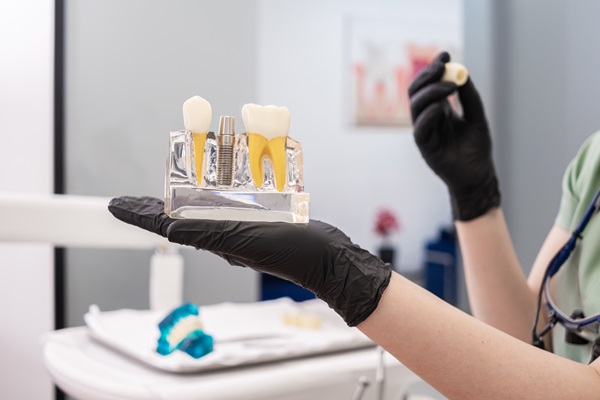
Dental implants are one of the most common ways to replace missing teeth in general dentistry nowadays. These are screws or rods (typically made out of titanium) that can serve as artificial teeth roots. Oral restorations like crowns are fitted to implants to replace missing teeth. Implants are constructed to last a lifetime, but the restorations attached to them typically last anywhere between 10 and 25 years.
Replacing missing teeth with dental implants
Replacing lost teeth with implants involves minor oral surgery. The implant is surgically inserted into the patient’s jaw, replacing the natural teeth root that fell out. The implant restores the function of the lost root, helping to preserve bone tissues in the area by keeping them stimulated.
Anyone interested in getting implants needs to be healthy enough to undergo minor oral surgery. Patients with health problems like diabetes have a higher risk of complications as they recover from a procedure. Such patients are evaluated individually to assess their risk level.
Patients also need to have enough thickness in their jawbone to keep implants in the jaw. Bone grafts can be used to thicken the jaws of patients if such thickness is required. However, patients who get bone grafts will need to be fully recovered before proceeding with implants, and it can take up to three months to recover from bone grafts.
Lifestyle habits like smoking, drinking, or prescribed medications are also discussed before clearing patients for implants. Such things can hinder the person’s ability to recover.
The process
Once a patient has been cleared for implants, a date is set for the placement of the oral prosthetic. Local anesthetics are administered at the start of the procedure, so the patient does not feel any pain as the dentist works.
An incision is made into the patient’s gums to provide the dentist with access to their jawbone. Then, a dental drill is used to make a hole in the jaw. The hole is slightly smaller than the diameter of the implant being used. The implant is then pushed into the hole until bone tissues around it hold it in place, just like wood holds a nail in place. That typically concludes the first phase of the treatment. Depending on the type of implant placed, a crown or some other restoration might be attached to it during the same procedure.
Most patients will have to wait up to six months for the implant to fuse with bone tissues around it. The process is termed osseointegration, and it bonds the implant to the patient’s jaw just like a real tooth’s root.
Once osseointegration is complete, the patient comes in for the second part of the treatment. A cosmetic like a crown is attached to the implant to replace the patient’s lost tooth. The installed implant should last the rest of the patient’s life with good oral hygiene.
Frequently asked questions about implants
Let us go over the answers to some commonly asked questions about dental implants:
1. Will implants help if I already use dentures or bridges?
Yes. Implants can be used as bases for restorations like dentures and bridges. It is quite common to combine implants with these restorations. Dentures provide the most economical solution for missing teeth, but they are held in place via suction, which often leads to the appliance shifting while worn. It is one of the biggest complaints people who wear dentures have.
Dentists typically address that problem by recommending implant-supported dentures or bridges. The procedure involves inserting multiple implants into each dental arch being treated and using them as bases for dentures. The patient gets a stable solution for missing teeth.
2. How do implants help to keep my jaw healthy?
Implants are technically not used to replace missing teeth; they replace the roots of lost teeth. It is the restoration that is placed on the implant that replaces the lost tooth. Other missing teeth replacement options like dentures and bridges only replace the visible part of teeth.
Implants replacing lost teeth roots means bone tissues in the jaw keep getting the stimulation they need to remain healthy. As with muscle tissues, bone tissues need constant stimulation to prevent atrophy. Implants transfer bite forces from the restoration into the jaw, giving tissues there the stimulation they need to be healthy. Preserving bone tissues in the jaw helps to preserve your appearance since bone tissue loss in the jaw leads to wrinkles and fine lines forming on the face.
Replace your missing teeth
Are you dealing with a missing tooth? Give us a call or drop by our Miami clinic to set up an appointment with our dentist and explore treatment options like dental implants.
Request an appointment here: https://implantfamilydentist.com or call Miami Implant & Family Dentists at (305) 230-4040 for an appointment in our Miami office.
Check out what others are saying about our dental services on Yelp: Dental Implants in Miami, FL.
Recent Posts
Not only does replacing missing teeth restore the smile’s appearance, but it also enhances oral health and helps preserve the jawbone. Dental implants are a reliable, durable solution for patients who require multiple tooth replacements, as they provide stability and a natural look and feel. There is more than one implant option available, with each…
Dental implants offer more than just cosmetic benefits. They restore oral function, improving speech and chewing efficiency while preserving jawbone structure. These long-lasting solutions provide stability and durability, making them a preferred choice for patients who want to replace one or more missing teeth.Missing teeth can impact speech clarity. Gaps between the teeth may lead…
Dental implants are one of the most reliable and lasting solutions for replacing missing teeth. Unlike traditional dentures or bridges, implants integrate with the jawbone to provide a stable foundation for artificial teeth. While many patients benefit from implants, not everyone is an immediate candidate. Certain factors must be evaluated to determine eligibility, and for…
Although dental implants do not develop cavities, the gums, and surrounding areas still need proper hygiene. A consistent oral care routine helps ensure the implants stay strong and last for many years. Understanding how dental implants may change daily hygiene habits can help maintain a healthy and confident smile.Daily brushing is just as important for…